
✓ In Stock

Home / Shop / Photoperiod / Mango Mimosa
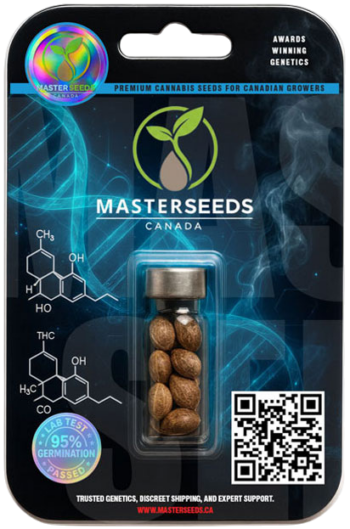
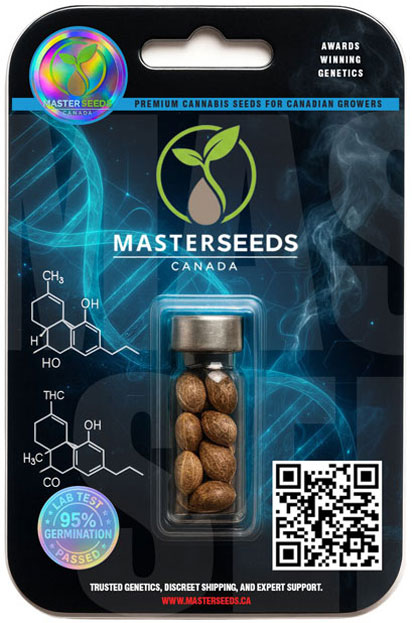
Mango Mimosa is a sativa-dominant hybrid that delivers lively, uplifting effects and a strong mango-citrus flavour. THC sits in the low twenties while CBD remains low, so dosing matters for medical use. Growers will find a moderate challenge that rewards steady feeding, good airflow, and proper light. Use training to control height indoors and plan for a warm outdoor season in southern regions. MasterSeeds offers feminized seed packs suited to home growers and licensed operations in Canada.
Secure Payment Methods
| Trait | Value |
|---|---|
| Type | Sativa-dominant hybrid |
| THC | 20-24% |
| CBD | <1% |
| Grow Difficulty | Moderate |
| Flowering Time | 8-10 |
| Yield | Medium-high (350-500 g/m2 indoor) |
| Height | Medium to tall (80-160 cm indoor) |
| Environment | Indoor and outdoor |
| Effects | Uplifting, Energetic, Sociable |
| Flavors | Mango, Citrus, Sweet tropical |
| Genetics | Mango x Mimosa |
| Climate | Warm, Mediterranean; suited to BC and Ontario summers |
Mango Mimosa is a sativa-dominant hybrid that leans toward cerebral effects. Many Canadian growers describe this type as lively and focused for daytime use.
THC levels typically sit between 20% and 24% in well-grown crops. That places Mango Mimosa higher than many popular indica strains in Canada.
CBD content stays low, usually under 1%. Medical users in Canada select it for THC-driven relief rather than CBD content.
Growing Mango Mimosa requires moderate experience and steady nutrient control. Outdoor plans must factor local laws and the short northern season when you schedule planting.
Flowering runs about 8 to 10 weeks indoors. Outdoors in southern Canadian regions this often finishes by late September or October.
Indoor yields reach about 350 to 500 grams per square metre with proper light and feeding. Outdoor plants often deliver 400 to 700 grams per plant in warm regions like BC or Ontario.
Plants stay medium to tall, often 80 to 160 centimetres indoors with training. Outdoors they push taller under long summer days.
Mango Mimosa performs well inside under controlled lights and outside in warm seasons. Quebec growers benefit from greenhouses or early starts to avoid short summers.
Expect an uplifting, energetic high that clears your head and lifts mood. Canadian consumers often choose it for social situations and daytime use.
Genetics read Mango x Mimosa. That pairing delivers citrus-mango terpenes with a sativa lift.
These seeds are offered as feminized genetics for predictable female crops. MasterSeeds lists them for home growers and licensed producers in Canada where law permits.
Mango Mimosa prefers warm, sunny climates with stable humidity control. It thrives in BC coastal summers and in well-timed Ontario outdoor seasons while prairie provinces benefit from greenhouse use.
Everything you need to know about this strain.
No reviews yet. Be the first to review this product!
Secure Payment Methods
Premium Genetics, Canadian Grown Excellence

Choose from 5000+ master-bred strains selected for Canadian growers.

Plain packaging, nationwide shipping from our Canadian facility.

Delivery in 2-4 days with access to our grower community.
Canadian Genetics • Master Breeders • Discreet Service